
How to Rework Your Wardrobe Without Buying Anything New
As seasons change, so does how we see ourselves and that’s exactly why your wardrobe suddenly feels confusing. This blog breaks down why seasonal transitions trigger the “nothing to wear” feeling and how to restyle what you already own without unnecessary shopping.
STYLING 101
Vaishnavi Tyagi
2/4/20263 min read

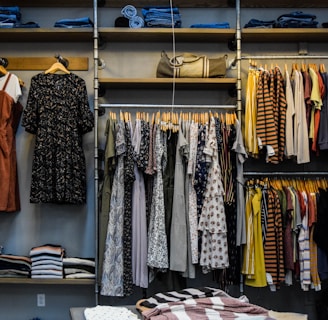
Changing Seasons, Changing Clothes — Why We Feel Lost (And How to Fix It Without Shopping)
Every time the weather shifts, something subtle happens.
It’s not just the temperature that changes — your sense of identity does too.
You had a rhythm during the summer.
You knew what to wear.
You felt like yourself.
Then the season changes.
Suddenly, you’re standing in front of your wardrobe thinking:
“I have nothing to wear.”
And no — it’s not because you lack clothes.
It’s because your styling language hasn’t caught up with the new season yet.
This blog is not about shopping.
It’s about relearning how to work with what you already own, so you don’t lose yourself every time the weather changes.
Why Seasonal Transitions Create an Identity Gap
During any season, we subconsciously build a uniform.
Certain silhouettes feel right
Certain colours feel safe
Certain outfits make us confident
That uniform becomes your seasonal identity.
When the weather shifts:
Those clothes feel impractical
Your comfort zone disappears
You feel visually disconnected from yourself
So you assume the problem is your wardrobe. It isn’t.
The real issue is that you haven’t translated your identity into the new season yet.
Here’s how to do that, without buying anything new:
1. Identify Your “Anchor Pieces” From the Previous Season
Every season, there are 4–6 pieces you repeat without realising.
Ask yourself:
What did I reach for the most?
Which outfits made me feel confident
What silhouettes felt effortless?
These are your identity anchors. Examples:
A linen shirt you loved in summer
A fitted tee you live in
A specific trouser cut you felt powerful in
Your job isn’t to abandon them, it’s to adapt them.
2. Layer Instead of Replacing
Seasonal change doesn’t require a wardrobe reset.
It requires layer intelligence.
Instead of thinking:
“This won’t work anymore”
Try:
Adding a lightweight jacket
Wearing a shirt open over a tank
Pairing summer trousers with closed shoe
Layering a scarf, shrug, or cardigan
Layering keeps your core identity intact while making the outfit weather-appropriate.
3. Keep Your Silhouette Consistent
Most people panic because silhouettes change with the seasons.
Loose in summer.
Structured in winter.
And suddenly — confusion.
Instead, choose one or two silhouettes that define you:
Straight fits
Relaxed tailoring
Fitted tops with fluid bottoms
Then apply them year-round using different fabrics and layers. Your silhouette is your signature — not the season.
4. Rotate Colours, Don’t Abandon Them
People often think:
“These colours are only for summer/winter.”
That’s rarely true.
Instead:
Keep 2–3 core neutrals constant
Shift accent colours with the season
Example:
Summer: white, beige, soft pastels
Transition: beige stays, pastels get layered with deeper tones
This keeps your wardrobe cohesive and prevents the “nothing matches” feeling.
5. Use Accessories as Seasonal Translators
Accessories do the quiet work most people ignore.
Without buying anything new:
Switch footwear style
Change bag texture
Add belts, scarves, watches, layering jewellery
The outfit underneath can stay the same - The context changes.
This is one of the fastest ways to feel “put together” again during seasonal shifts.
6. Create 5 “Transition Outfits” in Advance
Don’t wait for a bad morning to figure this out.
Once a season starts shifting:
Build 5 outfits you know work
Photograph them or note them down
Use them as your safety net
This removes decision fatigue and stops panic shopping.
Confidence often comes from preparedness, not perfection.
7. Stop Expecting the New Season to Feel Like the Old One
This is the most important point.
Every season asks something different from you:
Summer = ease
Winter = structure
Transitional weather = adaptability
If you keep chasing how you felt last season, you’ll always feel dissatisfied.
Instead, ask:
“How do I want to feel now?”
Then dress for that.
Style Is Not About Seasons; It’s About Continuity
The goal isn’t to reinvent yourself every few months.
It’s to:
Carry your identity forward
Adjust without erasing
Feel like you in every season
When you learn this, shopping becomes intentional — not emotional.
And “I have nothing to wear” quietly disappears.
If this feels familiar…
If seasonal changes leave you feeling visually lost, disconnected, or unsure of yourself, it’s not a clothing problem.
It’s an image alignment issue.
If you’d like help understanding your personal style across seasons and building continuity without over-shopping, you can reach out to us here: Contact Us
You can also book an Image Diagnostic Call to understand where you feel stuck and how to realign your wardrobe with who you are now.
We’ll work with what you already have and rebuild confidence from there.
Availability
Online - Worldwide
In Person - Delhi NCR
Contact Us
hello@vaishnavityagi.com
+91-9667745416


Vaishnavi Tyagi, Image Transformation Architect